Bundesliga: a guide to German football
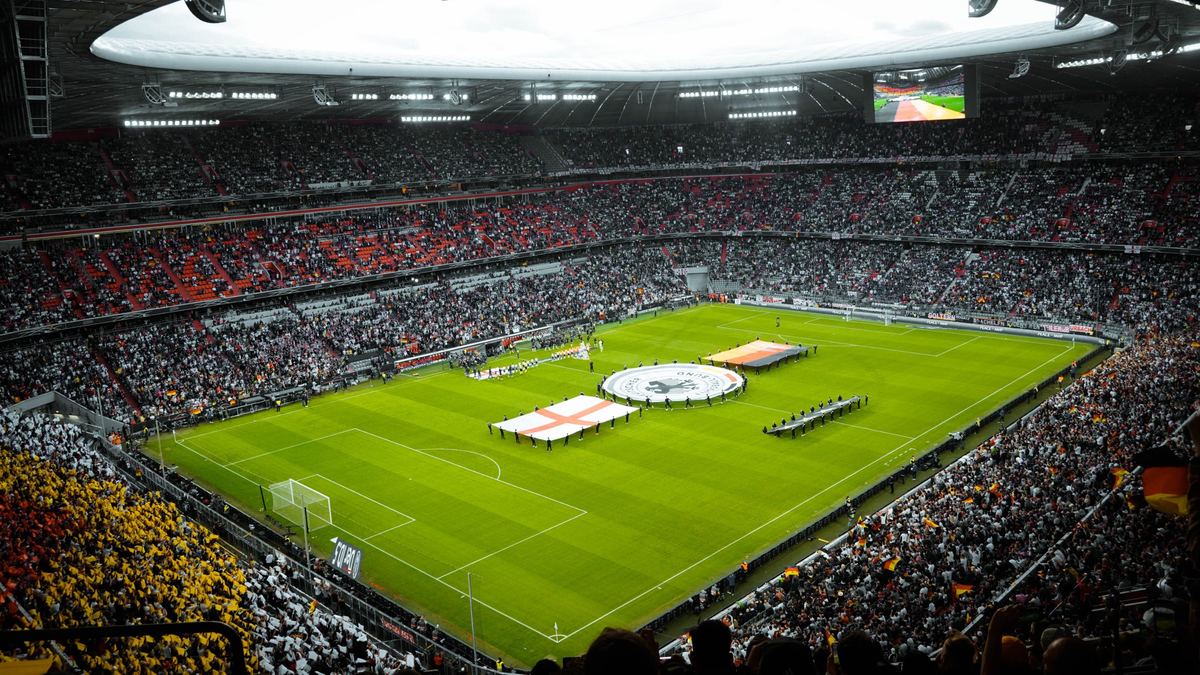
The Bundesliga is known for its packed stadiums, its atmosphere in the stands and one of the highest goals-per-game averages among Europe's major leagues. Here is how it works.
Format
Unlike England, Spain and Italy, the Bundesliga has only 18 clubs, so the season has 34 matchdays. A win is worth 3 points and a draw 1.
If teams are level on points, goal difference comes first, followed by goals scored.
Relegation: watch out for the play-off
| Position | What happens |
|---|---|
| 17th and 18th | Relegated directly to the 2. Bundesliga |
| 16th | Plays a two-legged play-off against the 3rd-placed team in the 2. Bundesliga |
Bayern Munich
Bayern is by far Germany's most successful club, with more league titles than anyone else. It is also one of Europe's giants, with several Champions League trophies.
Der Klassiker
The match between Bayern Munich and Borussia Dortmund is called Der Klassiker and is the biggest fixture in German football. Dortmund is famous for its "Yellow Wall" (Gelbe Wand), the huge south stand of its stadium, where thousands of fans watch the match standing up.
The 50+1 rule
This is one of the most distinctive features of German football. The 50+1 rule says that a club's members must keep the majority of voting rights (50% plus one vote). This means an outside investor cannot take full control of a club. There are a few historical exceptions, but the rule helps explain why tickets in Germany tend to be cheaper and why fans have so much influence.
Why are there so many goals?
- Many teams play with a high press and quick transitions.
- The league is a showcase for young talent, who get plenty of playing time.
- Coaches and fans value an attacking culture.
Cup competitions in Germany
The DFB-Pokal is the German Cup, with its final played every year at the Olympiastadion in Berlin. There is also the German Super Cup.